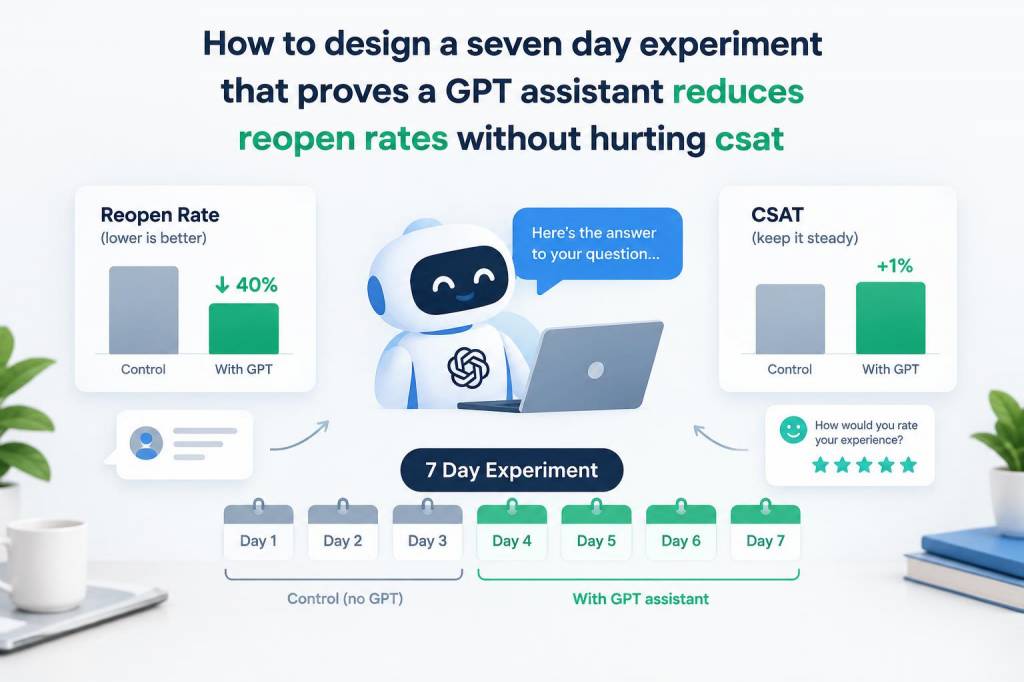
When I run pilots for new automation—especially AI that interacts directly with customers—I want one thing above all: clear, defensible evidence that the tech improves outcomes people care about. Recently I built a seven-day experiment to prove a GPT-powered assistant could reduce reopen rates...
Oct 15, 2026
• by Claire Moreau
Latest News from Customer Carenumber Co
I’m often asked how teams can reliably route conversations and preserve context across channels without hoarding personal data. After ten years working with support stacks and analytics, I’ve built and audited several identity approaches that strike a balance between usability and risk. In this piece I’ll walk through pragmatic patterns for a privacy-first customer identity layer you can...
Read more...

When teams talk about "reducing effort" in support, they usually mean time saved or fewer touches. Those are important, but they miss a critical dimension: emotional effort — the cognitive and emotional work a customer does to get unstuck. I've spent years watching support journeys and the worst churn stories almost always trace back to small emotional spikes that pile up. In this piece I'll...
Read more...
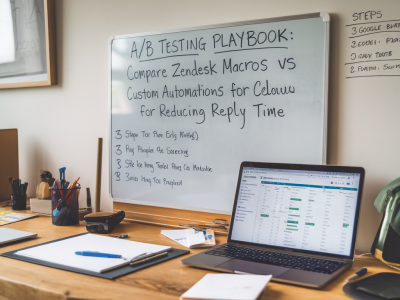
When teams ask me whether they should rely on Zendesk macros or build custom automations to reduce reply time, my instinct is to say: “Test it.” The answer depends on your ticket patterns, volume, agent workflows, and technical comfort. Over the years I’ve run A/B tests across support stacks to isolate what actually moves the needle — and you can too. Below I share a practical playbook I...
Read more...
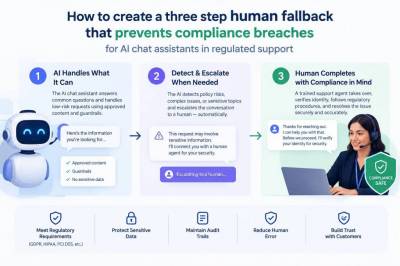
I want to share a practical framework I use when designing a 30-day chatbot-to-human handoff plan that both reduces escalations and protects customer satisfaction (CSAT). I’ve seen teams rush handoffs — either dumping complex queries on agents too early, or keeping customers stuck in bot loops too long — and both scenarios damage trust. This guide walks through the principles, the...
Read more...
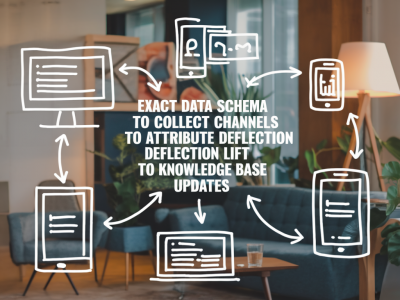
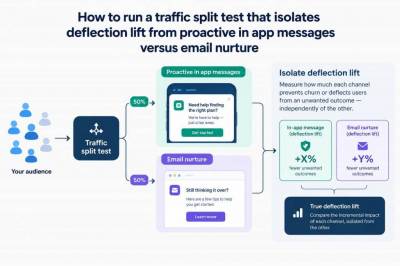
In my experience, one of the trickiest measurement problems in digital support is proving that knowledge base updates actually cause deflection lift. Teams often have the intuition—searches drop, contact volume falls—but without a consistent event schema across channels it's nearly impossible to attribute change to a content update rather than seasonality, product changes, or bot tuning....
Read more...

Proactive outreach is one of those CX moves that sounds simple on paper but gets messy in execution. Over the years I’ve seen teams throw automated follow-ups at customers with mixed results — some see reopen rates drop, others create noise and frustration. In this post I’ll walk you through a practical, three-tier proactive outreach workflow that I’ve built and iterated with support...
Read more...

I want to walk you through a real-world template I use when I need to quantify how improving first response time (FRT) — by any given percentage — will affect customer lifetime value (LTV). This is the kind of modelling that turns CX initiatives from "nice to have" into board-level priorities. I’ll share the assumptions I typically make, the step-by-step calculation, and a ready-to-use...
Read more...

When I first started experimenting with sentiment analysis in a ticketing system, I expected a quick win: drop in manual triage, faster escalations, happier customers. What I found was more nuanced and, ultimately, more valuable. Sentiment isn't a magic wand — it's a signal. Done well, it helps your team prioritize, improve coaching, and spot trends before they become crises. Done poorly, it...
Read more...

Running a vendor trial for an AI assistant is one of those projects that looks deceptively straightforward until you’re three vendors in and your inbox is full of demo recordings, feature matrices, and slippery promises about “human-like” understanding. I’ve run more than a few trials like this, and the difference between a trial that leads to a successful deployment and one that wastes...
Read more...
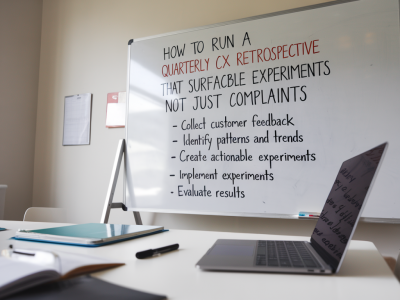
I run quarterly CX retrospectives because monthly fire-fighting and weekly stand-ups rarely create the space to learn deliberately. Over the years I’ve seen retros devolve into complaint sessions — a room where every pain point is aired but nothing changes. In this post I’ll share a reproducible template I use at Customer Carenumber Co (https://www.customer-carenumber.co.uk) to run a...
Read more...