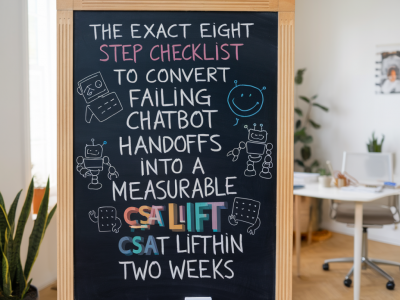
I used to cringe every time a chat transcript ended with a handoff that read like an apology stitched into a system log: “Transferring to agent… estimated wait: unknown.” If your chatbot hands off poorly, customers feel abandoned and CSAT tanks. Over the years I’ve distilled a repeatable...
Read more...

I often get asked: what single change will move the needle on self-service metrics fastest? In my experience with enterprise SaaS support teams, the answer rarely lives in a full redesign or a new platform module. It lives in precise, surgical edits to the knowledge base articles agents and...
Read more...

When a chatbot fails in a regulated environment — finance, healthcare, telecoms — it’s not just an annoyance: it’s a potential compliance incident. I’ve seen automated assistants misroute sensitive queries, collect information they shouldn’t, or give incomplete answers that drive...
Read more...

I run a lot of vendor trials for support teams, and one lesson keeps resurfacing: a standard seven-day trial rarely reveals the full cost of switching platforms. Vendors make their modern UIs and canned automations look effortless, but the long-term expenses — training, migration complexity,...
Read more...
I’ve been in the thick of incident comms for years — from small SaaS outages to multi-region platform failures — and one lesson keeps coming back: customers will forgive a problem if you communicate clearly, quickly, and honestly. The challenge is doing that in a world where attention is...
Read more...

I want to walk you through a practical audit checklist I use when hunting for the one knowledge article that can deliver a meaningful deflection lift—typically in the 8–12% range—for a digital support channel. This is the kind of win that scales: one well-placed, well-written article that...
Read more...
When teams roll out GPT-based support assistants, the focus often lands on speed, deflection rates and the wow factor of conversational AI. What’s less sexy but far more critical is building a fail-safe human handover policy that prevents compliance slip-ups. I’ve seen the gap between automated...
Read more...
I used to love macros. They promised consistency, speed, and a way to scale support without hiring an army. But over the years I watched the very thing meant to speed conversations quietly erode one of the hardest-earned metrics in support: CSAT. In countless Zendesk instances and similar ticketing...
Read more...

When teams ask me how to choose a support platform, the first thing I tell them is: don’t judge a vendor on feature checklists alone. The real decision-maker is the total cost of ownership (TCO) — and the only reliable way to estimate that is by running a vendor trial designed specifically to...
Read more...
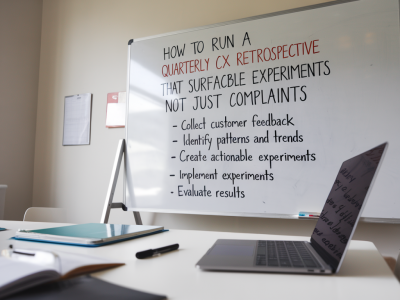
I run quarterly CX retrospectives because monthly fire-fighting and weekly stand-ups rarely create the space to learn deliberately. Over the years I’ve seen retros devolve into complaint sessions — a room where every pain point is aired but nothing changes. In this post I’ll share a...
Read more...