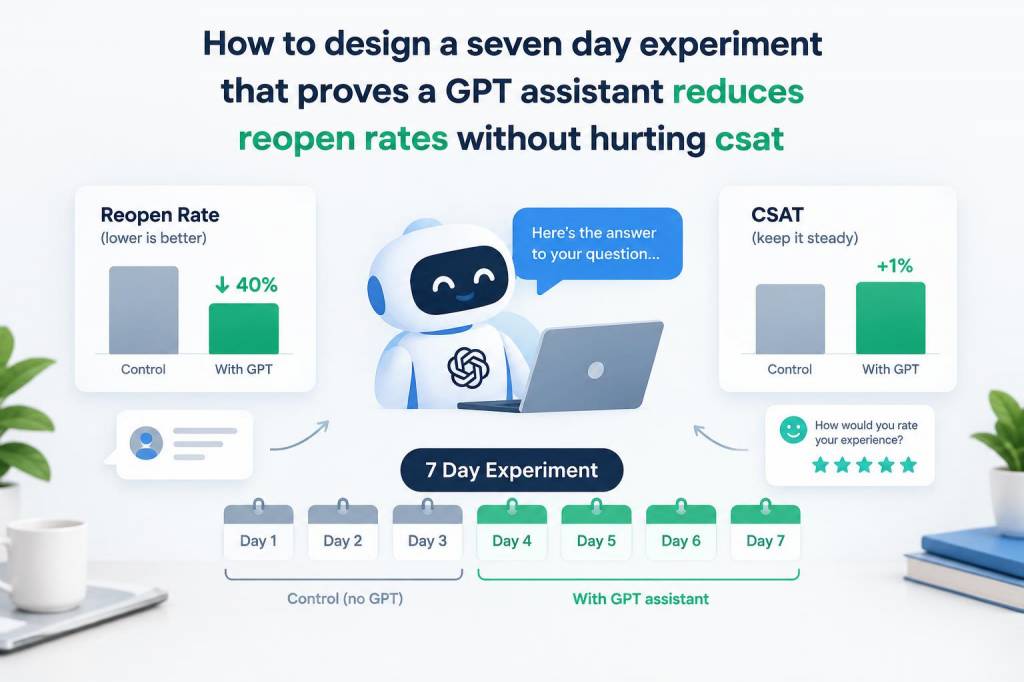
When I run pilots for new automation—especially AI that interacts directly with customers—I want one thing above all: clear, defensible evidence that the tech improves outcomes people care about. Recently I built a seven-day experiment to prove a GPT-powered assistant could reduce reopen rates...
Oct 15, 2026
• by Claire Moreau
Latest News from Customer Carenumber Co

I recently ran a seven-day sprint to measure the true ROI of a GPT-assisted agent workflow, and I want to share the exact approach I used so you can replicate it. When vendors promise “faster replies” and “higher CSAT” with large language models (LLMs), what they rarely provide is a simple, repeatable framework for quantifying the business impact in your environment quickly. This is that...
Read more...

I’ve spent years helping support teams stitch together people, processes and platforms so that technology genuinely improves customer outcomes. When generative AI assistants enter the picture, one of the first questions I hear from teams in regulated industries is: “How do we prove what the AI did and when a human took over?” Building an auditable human handover trail isn’t just about...
Read more...

I ran a one-week experiment in my support team to answer a simple but important question: how do GPT-assisted agent replies affect CSAT and handle time? We’ve all seen glossy vendor decks claiming AI will cut handle times and boost satisfaction simultaneously, but in practice those goals can conflict. I wanted a pragmatic, measurable test that would tell us what actually happens when agents use...
Read more...

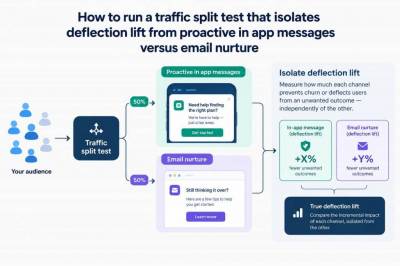
When you update your knowledge base, how do you know whether that work actually reduced incoming contact volume — and which channels benefited? I’ve spent years helping support teams move from intuition to measurable outcomes, and one of the most reliable levers is tracking deflection attributed to knowledge updates. The challenge has always been practical: tickets are created across chat,...
Read more...

I often get asked: what single change will move the needle on self-service metrics fastest? In my experience with enterprise SaaS support teams, the answer rarely lives in a full redesign or a new platform module. It lives in precise, surgical edits to the knowledge base articles agents and customers already use. I want to walk you through three targeted edits I’ve used repeatedly to increase...
Read more...

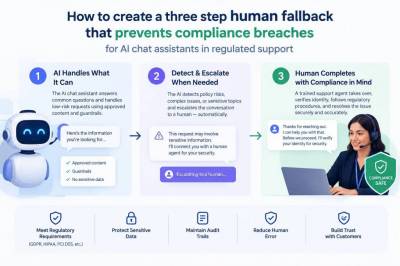
When a chatbot fails in a regulated environment — finance, healthcare, telecoms — it’s not just an annoyance: it’s a potential compliance incident. I’ve seen automated assistants misroute sensitive queries, collect information they shouldn’t, or give incomplete answers that drive customers to escalate through unsafe channels. Designing a human fallback that both restores a great...
Read more...

I want to walk you through a practical, lightweight approach I’ve used to catch problems early in chat channels: a three-metric early-warning system derived from chat transcripts that predicts when a conversation is likely to escalate or when a customer will reopen a ticket. This isn’t an academic exercise — it’s a pragmatic toolkit you can implement with transcript exports, a bit of NLP,...
Read more...
I run a lot of vendor trials for support teams, and one lesson keeps resurfacing: a standard seven-day trial rarely reveals the full cost of switching platforms. Vendors make their modern UIs and canned automations look effortless, but the long-term expenses — training, migration complexity, custom workflows, and maintenance — are where budgets and timelines actually get spent. In this post...
Read more...

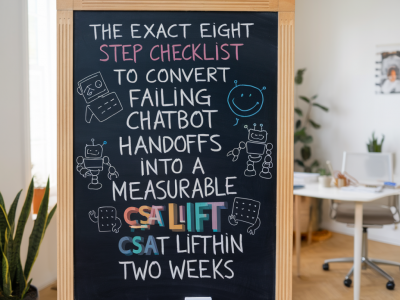
When a chatbot hands a conversation off to a human and the customer leaves frustrated, nobody wins. Yet failed handoffs are common — unclear context, long wait times, repeated questions, and agents who lack the right information. Over the past decade I've helped teams turn those moments from pain points into measurable CX wins. Here’s a sprint-ready playbook you can run in two weeks to...
Read more...

I often see product and support teams aim for two goals that can feel at odds: increase self-service deflection to reduce live handling, and keep identity risk tightly controlled. In practice you don't have to choose one or the other. With a privacy-first approach to proactive outreach, you can nudge the right customers toward secure self-serve paths while avoiding unnecessary exposure of...
Read more...