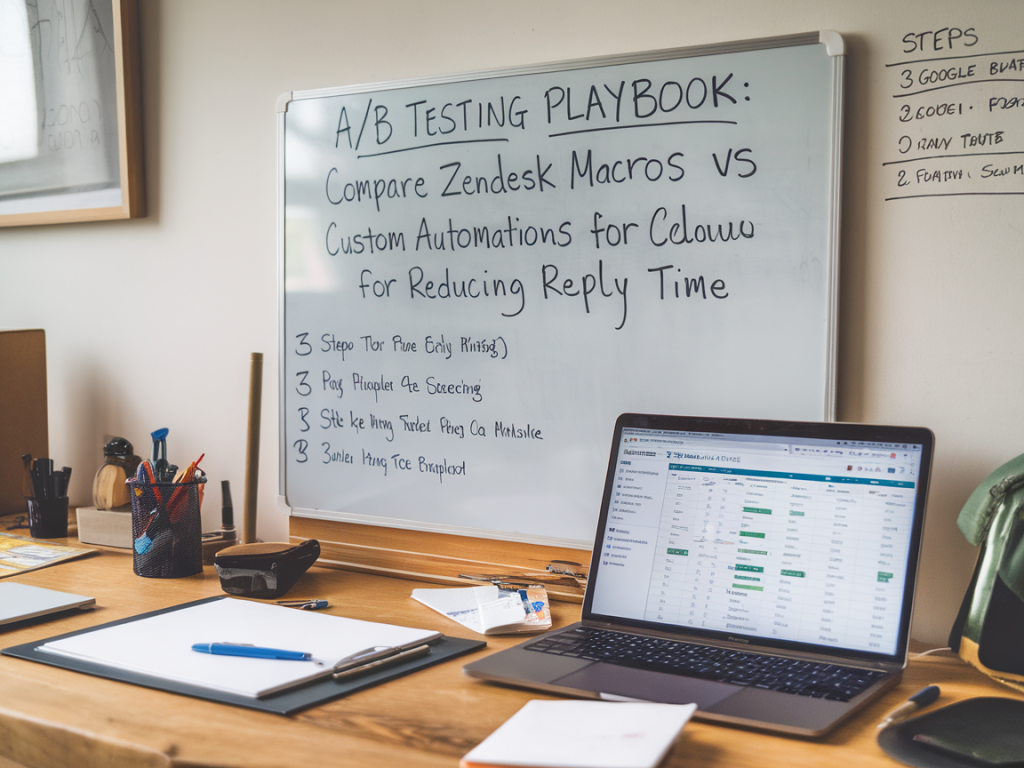
When teams ask me whether they should rely on Zendesk macros or build custom automations to reduce reply time, my instinct is to say: “Test it.” The answer depends on your ticket patterns, volume, agent workflows, and technical comfort. Over the years I’ve run A/B tests across support stacks...
Jan 27, 2026
• by Claire Moreau
Latest News from Customer Carenumber Co

Proactive outreach is one of those CX moves that sounds simple on paper but gets messy in execution. Over the years I’ve seen teams throw automated follow-ups at customers with mixed results — some see reopen rates drop, others create noise and frustration. In this post I’ll walk you through a practical, three-tier proactive outreach workflow that I’ve built and iterated with support...
Read more...

I want to walk you through a real-world template I use when I need to quantify how improving first response time (FRT) — by any given percentage — will affect customer lifetime value (LTV). This is the kind of modelling that turns CX initiatives from "nice to have" into board-level priorities. I’ll share the assumptions I typically make, the step-by-step calculation, and a ready-to-use...
Read more...

When I first started experimenting with sentiment analysis in a ticketing system, I expected a quick win: drop in manual triage, faster escalations, happier customers. What I found was more nuanced and, ultimately, more valuable. Sentiment isn't a magic wand — it's a signal. Done well, it helps your team prioritize, improve coaching, and spot trends before they become crises. Done poorly, it...
Read more...

Running a vendor trial for an AI assistant is one of those projects that looks deceptively straightforward until you’re three vendors in and your inbox is full of demo recordings, feature matrices, and slippery promises about “human-like” understanding. I’ve run more than a few trials like this, and the difference between a trial that leads to a successful deployment and one that wastes...
Read more...
I run quarterly CX retrospectives because monthly fire-fighting and weekly stand-ups rarely create the space to learn deliberately. Over the years I’ve seen retros devolve into complaint sessions — a room where every pain point is aired but nothing changes. In this post I’ll share a reproducible template I use at Customer Carenumber Co (https://www.customer-carenumber.co.uk) to run a...
Read more...

When teams ask me whether they should automate a touchpoint or send a customer to a human, I always push back: the right choice isn’t binary. It’s a sequence of decisions guided by risk, value, frequency, and the customer’s context. Over the past decade I’ve seen the best outcomes come from a practical framework that combines data, customer empathy, and fast experiments. Below I share a...
Read more...
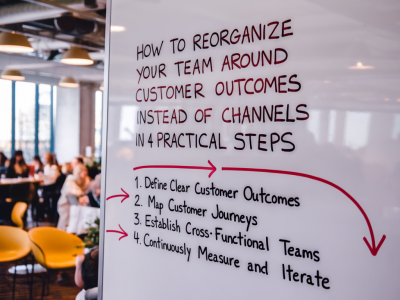
When I started helping support teams shift from channel-based organisation to outcome-focused squads, I expected resistance — but what surprised me most was how often teams hadn’t even agreed on the outcomes they were trying to deliver. Channels are easy to see: you can count phone lines, chat sessions, and inboxes. Outcomes are messier because they require judgement, measurement, and...
Read more...
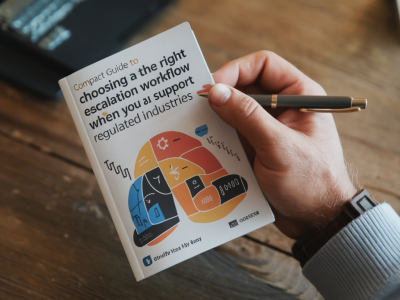
Supporting regulated industries — healthcare, finance, telecoms, utilities, and similar — forces you to be precise about escalation workflows. I’ve built and reviewed workflows for teams operating under strict SLAs, audit trails, and privacy constraints, and I still lean on a handful of practical rules whenever I design or evaluate an escalation path. This compact guide walks through what...
Read more...

I’ve spent more than a decade helping support teams design processes that keep customers calm and teams focused during incidents. One of the most reliable levers I’ve found is a well-drafted cross-functional incident runbook: a living document that defines who does what, when, and how we talk to customers. Done right, it reduces escalations, shortens resolution times, and — importantly —...
Read more...

When I help teams prove the value of self-service content, the most common problem I see is an appetite for perfect measurement that never turns into action. Teams design complex tracking schemas, wait for months of noisy data, then decide measurement is "too hard" and revert to opinion-based decisions.I've learned to flip that script: start with a minimal data collection plan that answers the...
Read more...